
Discontinued


4K HDBaseT Output Board
Featuring eight HDBaseT™ output ports, the board is compatible with the full range of Lightware TPS extenders and HDBaseT™ compliant 3rd party transmitters. The HDBaseT™ technology provides a transparent medium for all video, audio, data and control signals in line with the 25G multilayer architecture and allows for a cost effective extension solution for up to 170 meters.
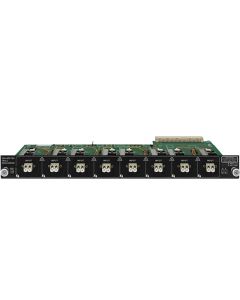
4K Singlemode Optical Input Board
25G‑8OPTS2‑IB‑SC is a 4K compatible fiber optical input board for the 25G router family. These optical boards can extend up to 10.000m distance with singlemode fiber technology. The OPTS technology provides a transparent medium for all existing video, audio and control signal formats according to the 25G multilayer architecture (Video, Audio, Ethernet,USB KVM, RS‑232, IR and CEC transmission), and allows the extension from MODEX transmitter units.

Forward audio layer
The Forward Audio channel is a second independent S/PDIF audio stream not related to the Embedded Audio. A separate S/PDIF matrix switch manages Stereo PCM, 5.1 Dolby Digital and DTS, and various other formats.
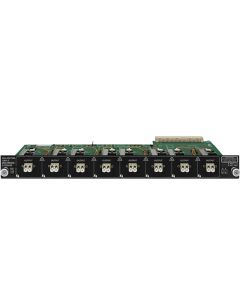
4K Multimode Optical Output Board
25G-8OPTM2-OB-SC is a new 4K compatible fiber optical output board for the 25G router family.
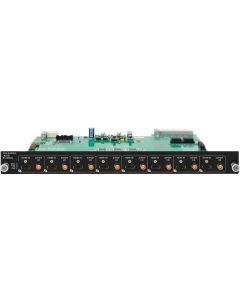
4K HDMI Input Board with Digital Audio Add-on
25G-8HDMI2-A2-IB provides fully transparent HDMI 1.4 connectivity to the latest high-end digital sources including 3D functions between the endpoints.
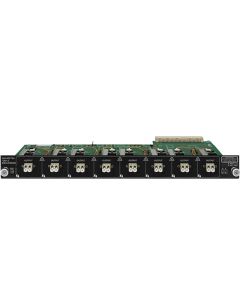
4K Singlemode Optical Output Board
25G‑8OPTS2‑OB‑ST is a 4K compatible fiber optical output board for the 25G matrix family. These optical boards can extend up to a 10,000m distance using singlemode fiber technology. The OPTS technology provides a transparent medium for video, audio, Ethernet, USB KVM, RS‑232, IR and CEC data according to the 25G multilayer architecture and allows the extension
to MODEX receiver units.
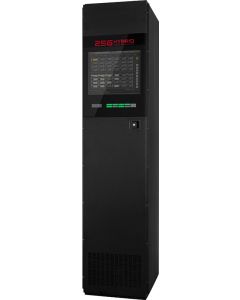
25G Hybrid Matrix Frame with 144x144 Crosspoint
The 25G frames can transmit video signals up to 4K resolution, support all 3D formats, handle forward audio, transmit USB‑KVM, Ethernet, bi‑directional RS‑232/RS‑422, IR and CEC signals. The intuitive graphical user interface offers easy and user‑friendly control accessing all available features. Advanced EDID Management is included in the frame which is also HDCP compliant.
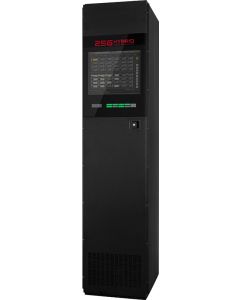
25G Hybrid Matrix Frame with 80x160 Crosspoint
The 25G frames can transmit video signals up to 4K resolution, support all 3D formats, handle forward audio, transmit USB‑KVM, Ethernet, bi‑directional RS‑232/RS‑422, IR and CEC signals. The intuitive graphical user interface offers easy and user‑friendly control accessing all available features. Advanced EDID Management is included in the frame which is also HDCP compliant.